
We have been working with Infinity Hoop since July 2025. Since then the brand has grown more than 80% YoY and reached almost $10M in just the first 6 months of 2026. Below is exactly what we changed, platform by platform.
Infinity Hoop is a direct-to-consumer fitness brand built around a smart, weighted fitness hoop for at-home workouts. It is a subscription (MRR) business with a product that demos well on camera.
We started working together in July 2025. At that point the budget was very small, Google was barely spending and nothing was happening on TikTok.
On Meta alone, the account went from $187K a month in July 2025 to over $1M a month in August 2026.
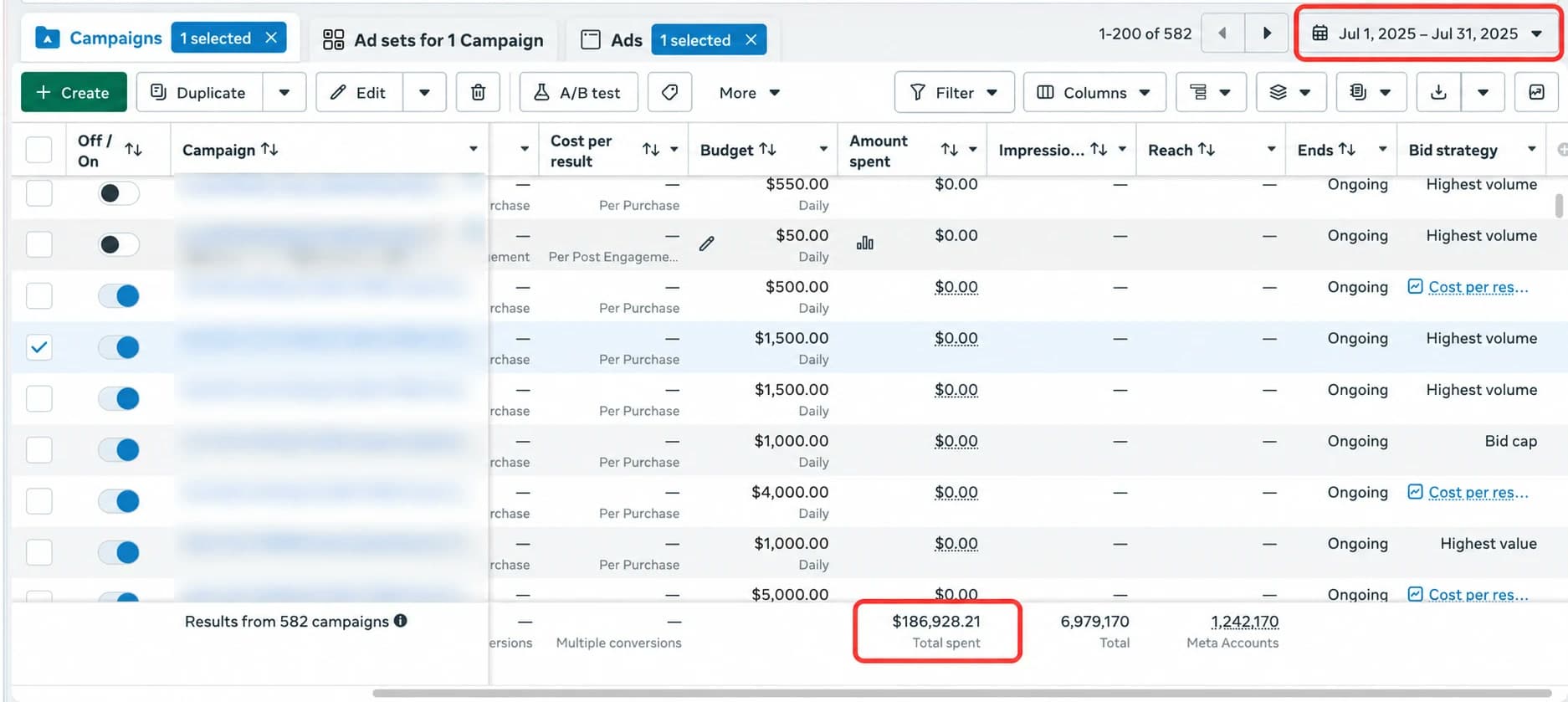
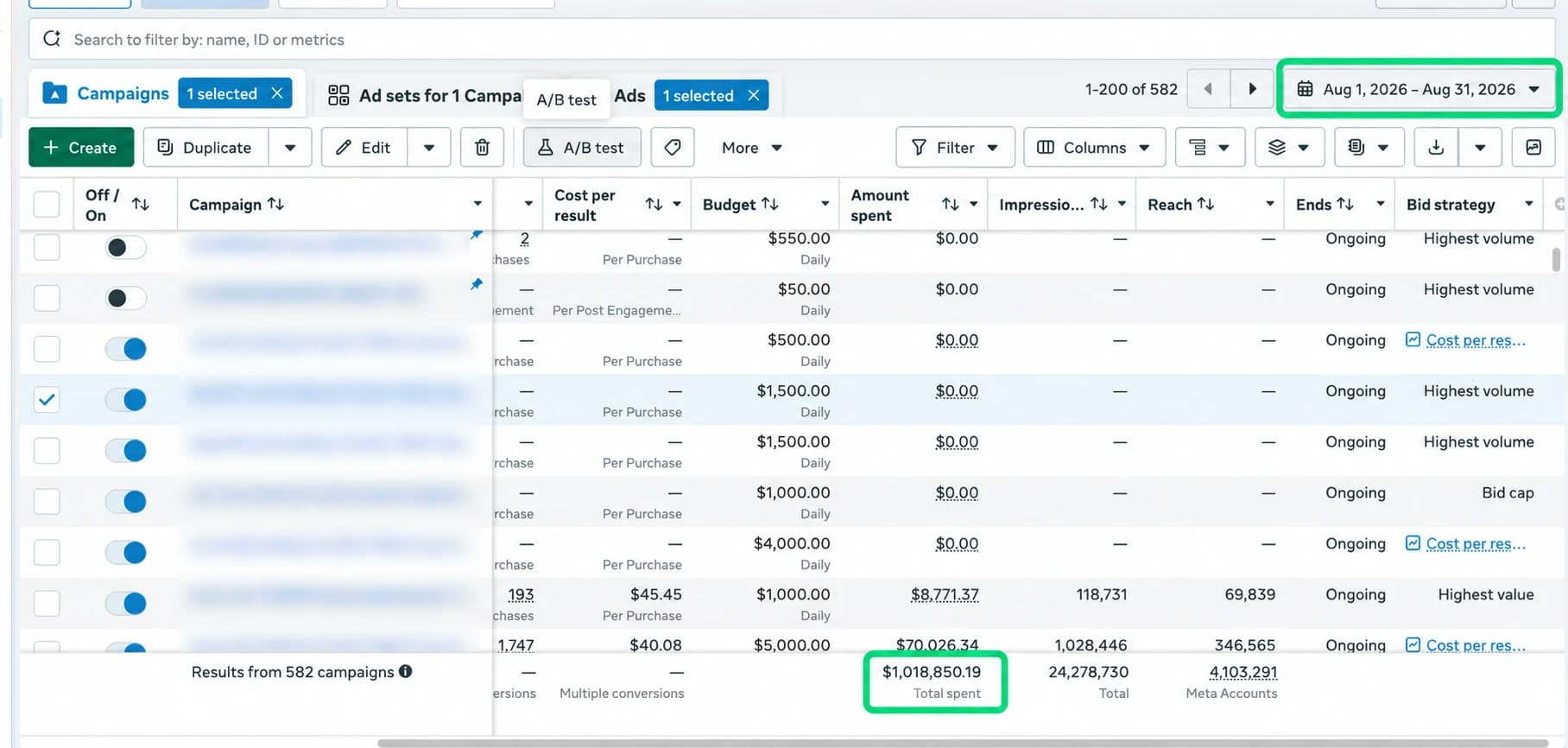
The implication: they were stuck in the same place. The team was stretched and there was no system, so the account could not scale.
Before touching a single campaign, we did the math. Our contribution margin calculator helped us pin down the numbers we were starting from and see, as ad spend grows, what is actually left after COGS and ads.
For first-party data and conversion attribution we used Hyros, so budget decisions did not rest only on what the platforms report.
The focus was first order profit, even though this is an MRR brand. Alongside that, most of the work went into churn and take rate.
With the numbers clear, we simplified the Meta account. Every campaign has one job, so you always know why it is spending and what it has to deliver.
That is how we scaled in Q4 with the focus on new customers, not retargeting. We removed the retargeting campaigns.
The page structure was simple: listicles for the top of the funnel, the PDP for the bottom of the funnel.
We ran a lot of A/B tests in Shoplift across several types of listicles. We judged them on three numbers: revenue per user, CR% and AOV.
We introduced a strict naming convention, so performance can be read at ad level.
Every week we knew exactly which creators were working and which concepts were working.
New angles do not come from brainstorming. We built a research system with two sides: internal research, meaning what people say about the brand, and external research, meaning what people say about the category. Everything lands in an audience one-sheet, and the angles come out of that.
Once a concept won, we did not move on to the next idea. We iterated on it through hook swaps, creator swaps and format swaps.
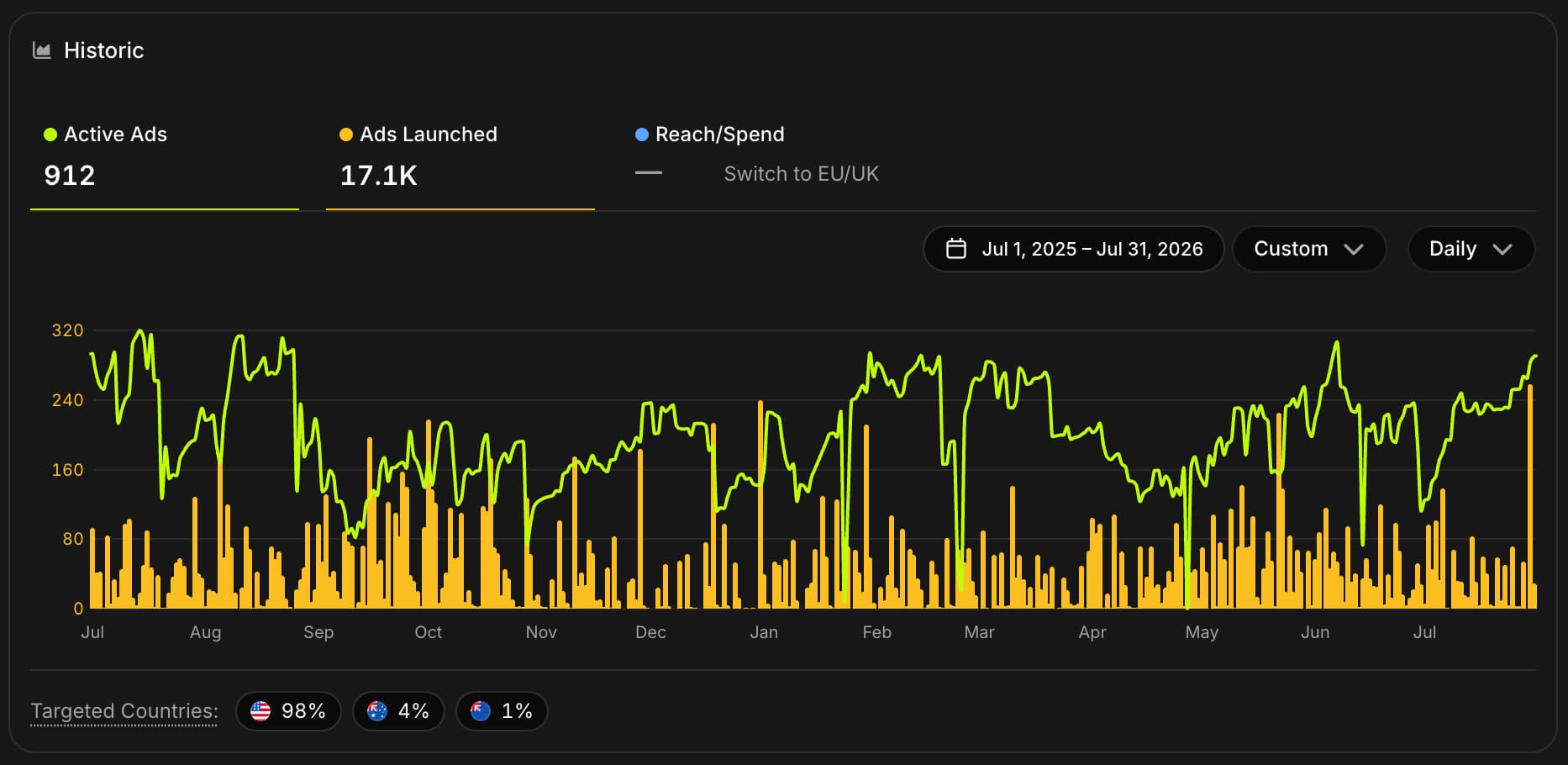
With the system in place, we were launching hundreds of ads a week. From July 2025 to July 2026 that added up to 17.1K ads launched. The chart shows the other half of the story: consistency, week after week.
We used TikTok mainly for TikTok Shop creators, as the place to validate them before putting budget behind them.
Product went out to TikTok Shop affiliates constantly, so new content never stopped coming in.
Creators and videos that sold on TikTok Shop ran as Spark Ads, and the best ones were brought into the Meta account too.
What worked on TikTok Shop fed the briefs for the next round of creatives.
On Google the account was structured like this: Shopping on best sellers, Shopping on the rest of the products and PMAX on best sellers, all non-brand, then Search and Shopping on brand, and Demand Gen on YouTube only.
Brand terms were excluded from the non-brand campaigns, so each campaign shows its real performance and carries its own target.
Custom labels separated the best sellers from the rest of the catalog, so budget goes where the volume is.
Negative keywords were added on a regular basis, to keep spend on the searches that buy.
We optimized the titles and used a supplemental feed, where we kept testing different images and titles.
Everything that worked on Meta went into Demand Gen.
In 2026, Infinity Hoop grew more than 80% YoY and reached almost $10M in just the first 6 months.
On Meta, monthly spend went from $187K in July 2025 to over $1M in August 2026, with the focus on new customers.
LeoCo-founder, Infinity Hoop
Take the guesswork out of growth. Book a free discovery call and let's build a system that drives consistent, profitable revenue.
Let's talk↗


